

If you received a letter from Valley Water, the City of Palo Alto Utilities, or the City of Mountain View asking you to test your backflow prevention device, you’re not alone. Many homeowners in this area have been receiving similar notices since 2024, and most have the same first reaction: confusion about what backflow even is, why testing is now required, and what happens if the letter sits on the counter too long.
This article answers those questions in plain terms. Backflow prevention requirements for residential properties expanded significantly on July 1, 2024, under a new Cross-Connection Control Policy Handbook. If your property has an irrigation system, a pool, a spa, or a solar water heater, there is a good chance you now fall under mandatory annual testing. The deadlines are real, and so are the consequences for ignoring them.
What Is Backflow and Why Does It Matter
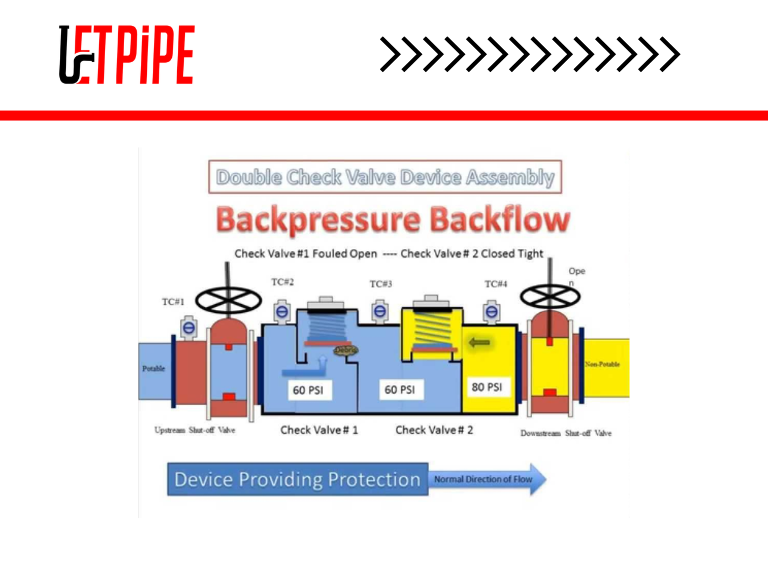
Backflow is what happens when water moves in the wrong direction through your plumbing. Under normal conditions, water flows from the public main into your home at positive pressure. When that pressure drops suddenly during a water main break, a fire suppression event, or planned maintenance work on the distribution system, water can reverse direction and flow from your property back into the public supply.
Without a protective device in place, whatever is in your plumbing at that moment goes with it. That includes fertilizer residue from an irrigation line, chemicals from a pool or spa, or water sitting in a solar thermal loop. These substances can reach neighboring connections on the same main. The problem isn’t theoretical. Water agencies have documented contamination events tied to unprotected cross-connections, and this is why cross-connection control programs exist in the first place.
A Backflow Prevention Assembly, or BPA, is a mechanical valve installed at the point where your private plumbing connects to the public water supply. It allows water to flow in one direction only. When pressure drops, the valve closes and physically blocks the reverse flow. The device does not treat or filter water. It simply prevents the backflow event from happening.
Annual testing confirms the valve still functions correctly. Internal rubber components wear over time and can fail without visible signs on the outside of the device. Testing is the only way to confirm the assembly is actually doing what it is designed to do.
What Changed: New Requirements Effective July 1, 2024
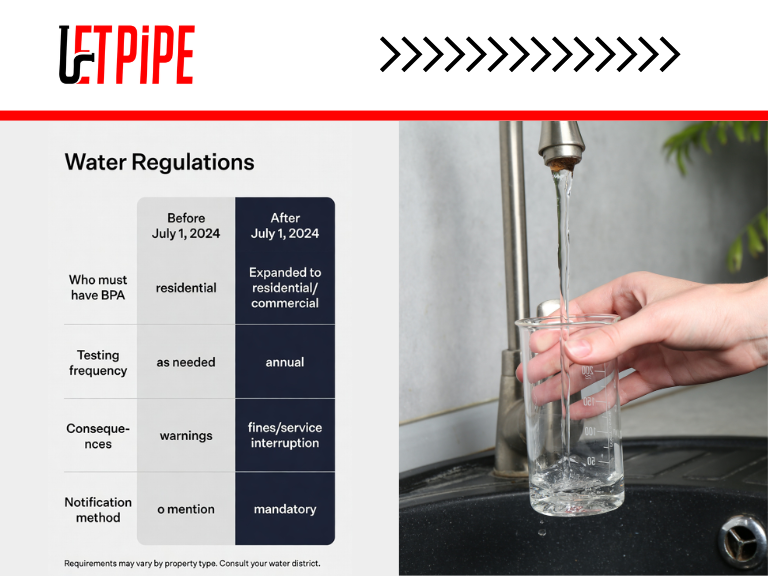
The City of Palo Alto updated its Cross-Connection Control Policy Handbook, effective July 1, 2024, based on California Health and Safety Code Section 116555(a)(2). The update expanded the category of properties required to have a backflow prevention assembly and maintain annual testing compliance.
Before the update, BPA requirements were focused primarily on commercial properties and a narrower set of residential uses. The revised handbook brought a much larger group of residential properties into scope. The core change is that any property with a system that creates a potential cross-connection to the public water supply is now covered. In practical terms, this means a standard single-family home with an in-ground irrigation system, a pool, or a solar water heater now carries the same compliance obligation that previously applied mainly to commercial accounts.
Mountain View and other cities served by Valley Water follow parallel requirements under the same regional cross-connection control framework. If your property falls within the Valley Water service area, the July 2024 requirements apply regardless of which city issued your notice.
The key practical change for most homeowners: receiving a compliance notice is no longer an edge case. If your property has any of the systems listed above and you have not had your BPA tested in the past 12 months, you are likely out of compliance.
Who Is Required to Test in Palo Alto and Mountain View
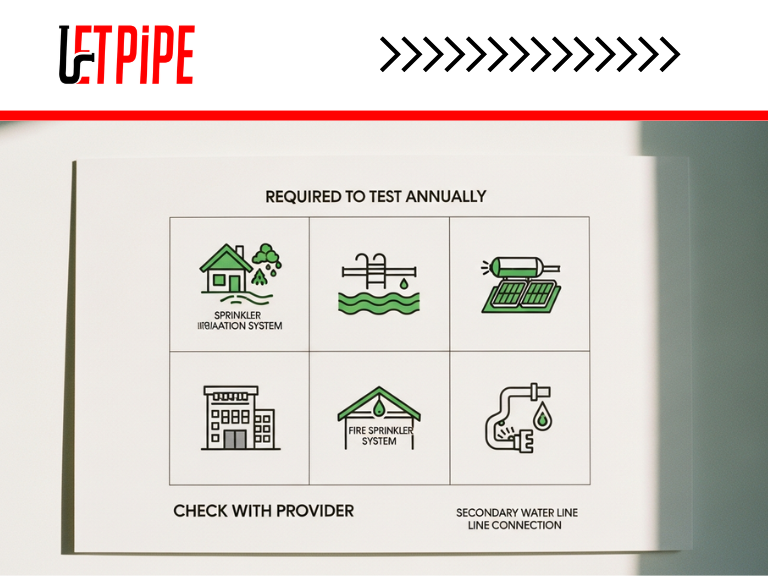
The following property types and systems trigger mandatory annual backflow testing under current requirements:
- Any property with an irrigation or sprinkler system connected to the potable water supply
- Properties with a swimming pool, spa, or hot tub
- Properties with a solar water heating system
- Properties with a fire suppression or fire sprinkler system
- Any property with a secondary or auxiliary water connection
- All commercial properties, regardless of use
If your property has more than one of these systems, you may have more than one BPA installed. Each assembly must be tested independently.
Device sizing is determined by your water meter. A 1-inch meter requires a 1-inch BPA. If the device on your property does not match your meter size, the installation is not compliant, and testing alone will not resolve the issue.
Under Palo Alto and Mountain View requirements, the BPA must be installed on the owner’s side of the property line, within 18 inches of the water meter. If your device is located further away or in an incorrect position, the city can require relocation as a condition of compliance.
How Annual Testing Works
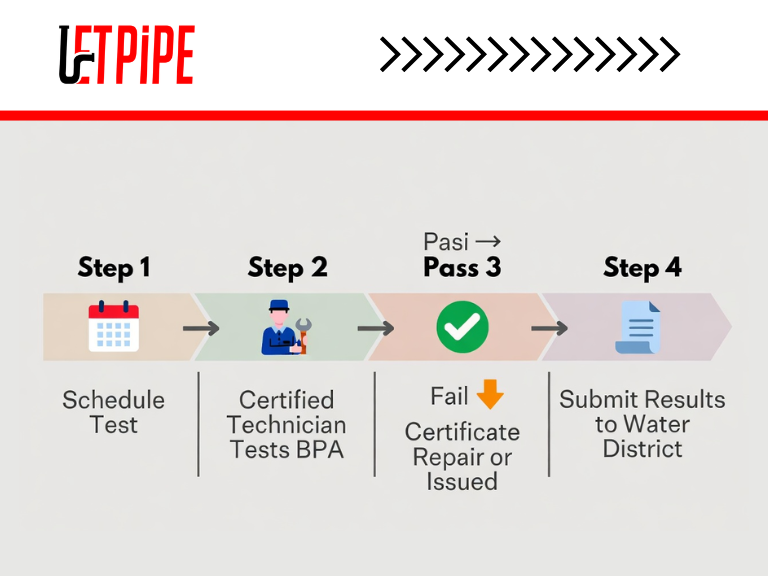
Backflow testing must be performed by a certified tester approved by the local water district. Not every licensed plumber qualifies. The tester must hold an AWWA (American Water Works Association) backflow testing certification and be on the approved list maintained by the water agency with jurisdiction over your property.
The test itself takes between 30 and 60 minutes. The technician isolates the device and uses calibrated gauges to confirm that each internal check valve is holding pressure correctly and that the relief valve activates when it should. During the test, water service to the property is briefly interrupted.
If the device passes, the technician completes a test report that gets submitted to the water district. Your compliance obligation for that year is satisfied.
If the device fails, you have two options depending on the nature of the failure. Internal rubber components, including check valves and the relief valve seat, can often be replaced during a repair visit without removing the entire assembly. This is typically the case for devices that are less than 10 to 12 years old and are mechanically sound aside from the worn parts. If the device is older, damaged, or has failed in a way that cannot be addressed through component replacement, full replacement is required.
A replaced device must be tested immediately after installation before the property is returned to service. The tester submits a new report to the district documenting the installation and the passing test result.
What Happens If You Don’t Test: Fines and Service Interruption
Ignoring a backflow compliance notice does not make the requirement go away. Both the City of Palo Alto and Valley Water have enforcement authority under their Cross-Connection Control Programs, and they use it.
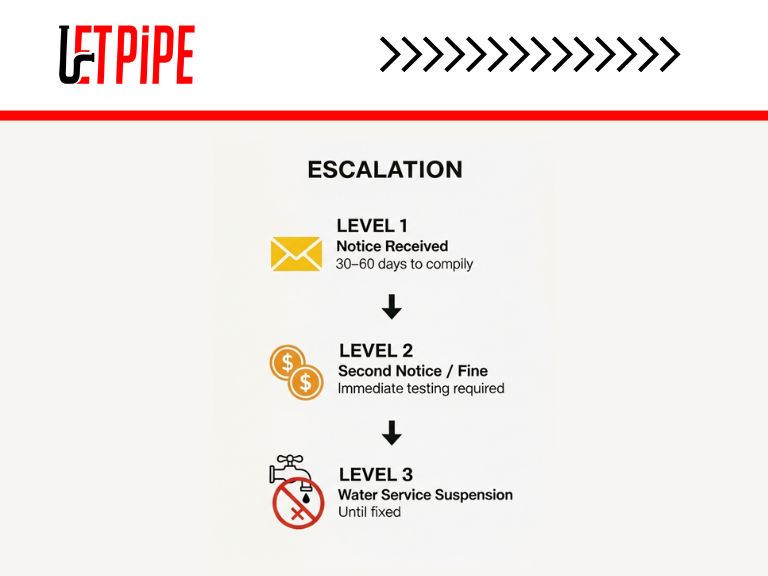
The standard sequence after a notice is issued works as follows. The first notice gives the property owner a compliance window, typically 30 to 60 days, to schedule and complete testing and submit results. If no action is taken within that window, a second notice is issued. The second notice may include a fine and typically shortens the remaining time to comply. If the property remains out of compliance after the second notice, the water agency can suspend service to the property until the issue is resolved.
Service suspension means no water to the property until a passing test report is submitted. For a residence, that is a significant disruption. For a business, it means closure. Reconnection after a suspension also involves a reconnection fee on top of whatever testing and repair costs are involved.
It is worth noting that the notices are sent by mail to the address of record for the water account. If you received a letter, the clock is already running. The compliance deadline is printed in the notice. Acting within the first two weeks of receiving a notice gives you the most flexibility to schedule a certified tester without rushing.
Finding an Approved Backflow Tester in Palo Alto and Mountain View
Backflow testing is a specialized service. The technician must be AWWA-certified and approved by the water district that serves your property. Hiring an unlicensed or non-approved contractor to perform the test will not satisfy the compliance requirement, and the district will not accept the report.
JetPipe Plumbing is a licensed California plumbing contractor (C-36 #1139033) serving Palo Alto, Mountain View, and the surrounding Bay Area. Our technicians are certified to perform backflow testing, repairs, and replacements under Valley Water and City of Palo Alto program requirements. We handle testing for both residential and commercial accounts, including properties with multiple assemblies.
If you have received a compliance notice, or if you have an irrigation system, pool, or solar water heater and are not certain whether your property has a BPA installed and tested, contact us before your deadline passes.