
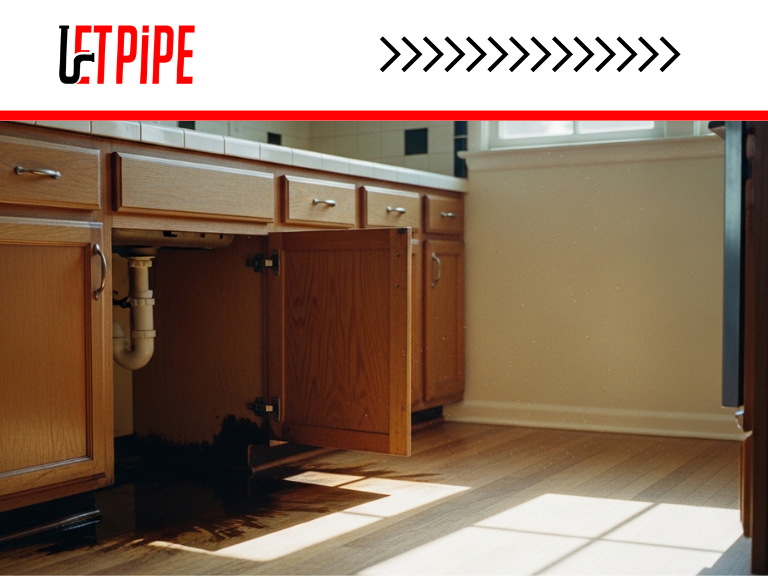
If you own a home in Sunnyvale or Santa Clara that was built before 1980, there’s a good chance you’ve noticed something odd: a slow drain that wasn’t there last fall, a faint moisture stain near the base of a wall, or a drop in water pressure that came out of nowhere. And if this happens in spring, you’re probably wondering why — it’s not like there was a freeze.
The answer has nothing to do with frost. Bay Area pipes don’t fail the way pipes fail in Chicago or Denver. The mechanism here is different, and it’s specific to this region: expansive clay soil, aging pipe materials, and seismic activity combine to stress your plumbing in ways that build up slowly and then give way — usually in late spring, right after the wet season ends.
This article explains exactly what’s happening underground, which homes are most at risk, what warning signs to look for, and what you can do about it before a small problem becomes an expensive one.
The Real Culprit: Bay Area’s Expansive Clay Soil
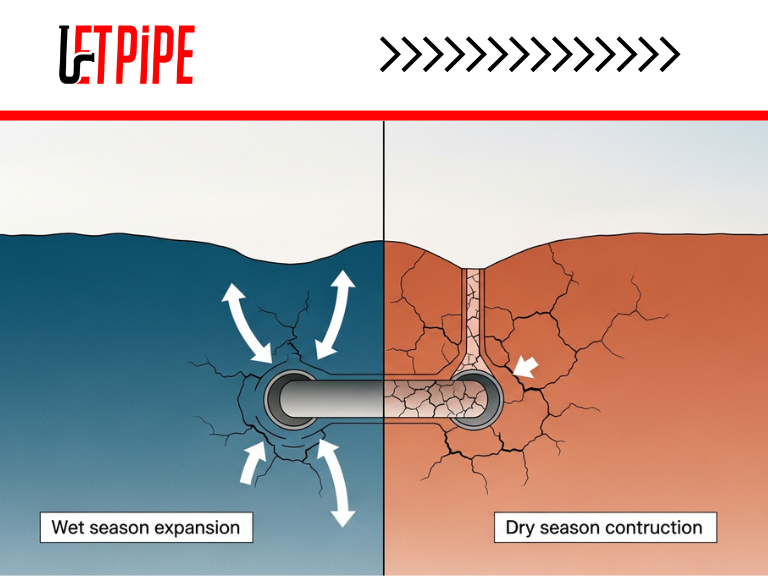
Most of Santa Clara Valley sits on expansive clay — a soil type that absorbs water and swells, then dries out and contracts. This isn’t a minor quirk. Clay soil in this region can shift several inches over the course of a year, and that movement happens around every buried pipe in your yard.
Here’s the cycle: from December through March, Bay Area rains saturate the ground. Clay swells outward, pressing against sewer laterals and water supply lines from multiple directions. Then, when temperatures rise in April and May and the soil begins to dry, it contracts, sometimes pulling away from pipe joints or twisting them slightly out of alignment.
One cycle of this movement won’t break a pipe. But multiply that by 50 years — the age of many homes in central Sunnyvale, Santa Clara, and Mountain View — and what you have is accumulated mechanical stress on materials that were never designed to flex indefinitely.
The problem intensifies during drought years. When soil dries more severely than usual, contraction forces are stronger, and pipe joints that were “almost holding” finally give way. That’s why plumbers see a spike in sewer line failures in late spring, especially after dry winters.
What’s Actually Inside Those Walls: Pipe Materials Used Before 1980
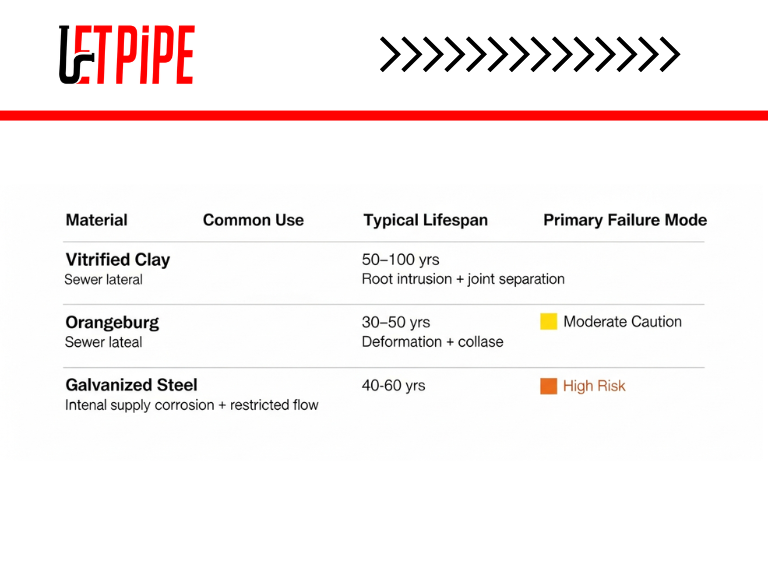
The type of pipe matters as much as the soil movement. Homes built in the 1950s through the late 1970s used materials that made practical sense at the time, but each has a defined service life, and most Bay Area homes from that era are now past it.
Vitrified clay was the standard material for sewer laterals in postwar construction. It’s a rigid, fired ceramic pipe installed in short sections — typically two to four feet each — joined together with mortar. The sections themselves are reasonably durable, but the joints aren’t. When soil shifts, those joints separate. Even modest ground movement can open a gap wide enough for tree roots to enter or for sewage to leak into the surrounding soil. In expansive clay conditions, where the ground is in constant seasonal motion, vitrified clay joints face that stress every single year.
Orangeburg is the material that concerns plumbers most in this part of the Bay Area. It was manufactured from compressed wood pulp, pitch, and asphalt — a wartime substitute for cast iron that ended up in thousands of homes built in Sunnyvale and Mountain View through the 1950s. Orangeburg was never intended to last more than 50 years, and under sustained soil pressure and moisture exposure, it softens and deforms. A pipe that was originally round gradually becomes oval, then collapses. There’s no repairing it. Once Orangeburg reaches this stage, it needs full replacement.
Galvanized steel handled water supply in most pre-1980 homes. The problem isn’t how it responds to ground movement — it’s what happens inside the pipe over time. Galvanized steel corrodes from the interior outward. Mineral deposits and rust accumulate, narrowing the bore and reducing water pressure. As the pipe wall thins, it becomes brittle and more susceptible to cracking at fittings and elbows — exactly the points that experience stress when the ground shifts. Galvanized supply lines in a 60-year-old home are not just old. They’re structurally compromised.
In practice, most homes built between 1950 and 1975 have at least one of these three materials still in the ground. Some have all three. The service life of each has a ceiling, and that ceiling, for the majority of Bay Area vintage homes, has already passed.
Why Spring Is the Breaking Point
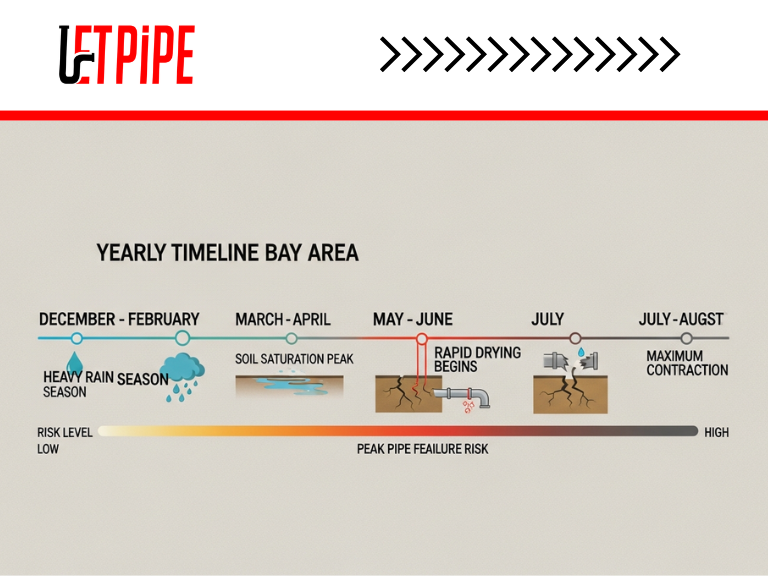
Soil movement happens year-round, but the period from late April through June creates the most mechanical stress on buried pipes. Here’s why.
After a wet winter, clay soil reaches its maximum saturation. As temperatures rise and rainfall stops, the drying process begins rapidly, and the contraction that follows isn’t gradual. In a drought year, when the soil moisture deficit is larger, this contraction can be especially severe.
The joints in old clay and Orangeburg sewer lines are their weakest points. During winter, soil pressure holds everything together. As the ground pulls back in spring, it creates tension across those joints. If the pipe material has been weakened by decades of prior cycles or if tree roots have already started intruding, this is the moment a slow leak becomes a visible failure.
This pattern is documented beyond individual job calls. East Bay MUD — the regional water utility serving Alameda and Contra Costa counties — has tracked a consistent spike in pipe failures and service disruptions during periods of drought combined with rapid soil contraction. The same clay geology and seasonal dynamics that affect East Bay infrastructure run through Santa Clara County, including Sunnyvale and Santa Clara. The spring dry-down period, particularly following drought winters, is when accumulated stress across aging systems reaches its threshold.
This is also the time when homeowners start using irrigation systems again. Increased water flow through corroded galvanized supply lines can expose pressure problems that were masked during low-use winter months.
Warning Signs Your Pipes Are Under Stress
None of the following symptoms fix themselves. Each one that gets ignored tends to cost more by the following spring.
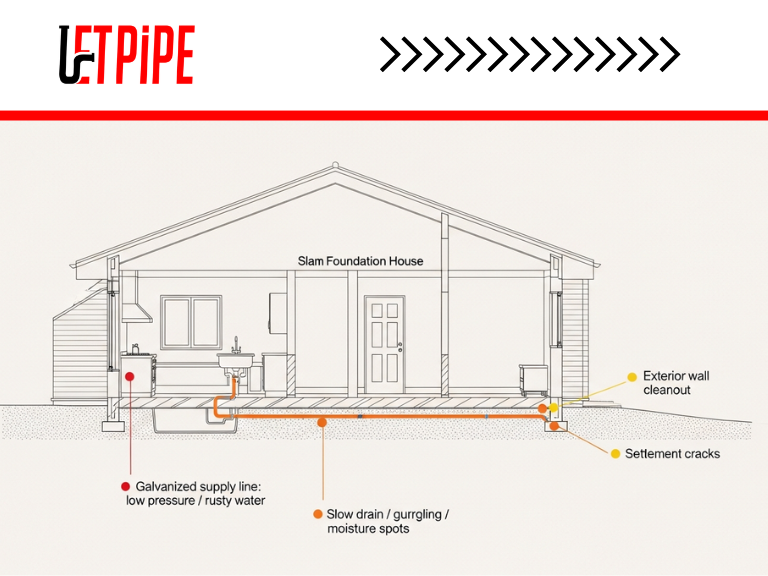
- Reduced water pressure — often caused by internal corrosion narrowing the bore of galvanized steel supply lines.
- Slow drains or gurgling sounds — typically indicate partial blockage or joint separation in the sewer lateral.
- Moisture stains near the base of walls or on concrete floors in spring — water tracking along a pipe that’s started to leak underground.
- Rust-colored water or a metallic taste — a sign that galvanized pipe corrosion has progressed to the point of flaking.
- Cracks in the foundation or visible ground settling above where the sewer line runs — suggest significant pipe displacement or collapse.
- Sewage odor in the yard or near the house — usually indicates a break in the lateral that isn’t yet backing up inside the home.
Any one of these is enough reason to get a camera inspection done. More than one is a clear signal to act before the next wet season.
The Seismic Factor: One More Reason Bay Area Is Different
Bay Area homeowners deal with something most of the country doesn’t: seismic activity that adds an entirely separate category of stress to buried pipes.
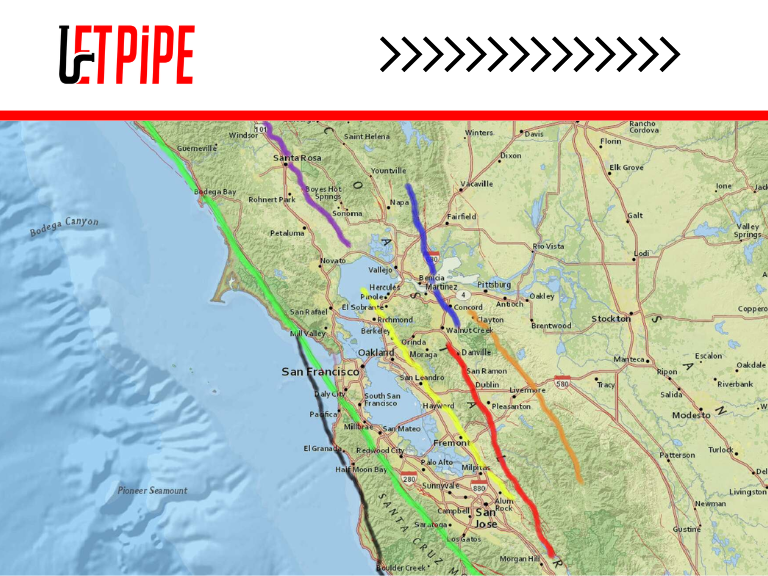
Every earthquake above 4.0 magnitude creates micro-displacement along fault lines — small shifts in the ground that aren’t visible on the surface but are enough to loosen the mortar joints in clay sewer lines or crack Orangeburg that’s already soft. These shifts don’t cause immediate failures. They accumulate.
Homes that experienced the Loma Prieta earthquake in 1989 or the South Napa earthquake in 2014 without a subsequent sewer inspection may have joints that are partially unseated — functional but vulnerable. The Hayward Fault runs directly through the East Bay. The Calaveras Fault passes through eastern Santa Clara County. Neither has produced a major event in decades, which means stress has been building.
For pipes that are already compromised by age and soil movement, seismic activity is one more variable that reduces the margin before failure. This is why video inspection is now standard practice after any notable seismic event in the region — not a precaution for the worried, but a practical check on infrastructure that has no other way to be evaluated without digging.
What a Video Inspection Actually Shows

Many homeowners put off sewer camera inspection because it sounds invasive or expensive. In practice, it’s neither.
The process involves inserting a small waterproof camera on a flexible cable into the cleanout access point — typically a capped pipe fitting near the foundation or in the yard. The camera travels through the sewer lateral and transmits live footage to a monitor. The whole thing takes one to two hours and requires no digging, no demolition, and no disruption to your yard.
What the footage shows: the actual interior condition of your pipe. Joint gaps where clay sections have separated. Sections of Orangeburg that have deformed or partially collapsed. Root intrusion that’s blocking flow. Corrosion patterns in galvanized supply connections. Cracks from soil movement or seismic stress.
Without this, you’re guessing. With it, you have a clear picture of what’s there, how serious it is, and whether it needs immediate repair or just monitoring.
For homes built before 1980 that have never had an inspection, this is the only reliable way to know what’s actually happening underground.
When to Call and What to Ask
If your home was built before 1980, has never had a video sewer inspection, and you’ve noticed any of the symptoms described above, that’s enough reason to schedule one.
You don’t need to wait for a backup or a visible leak. By the time those happen, the repair is typically more involved and more expensive than it would have been six months earlier.
JetPipe Plumbing serves Sunnyvale, Santa Clara, and the broader Bay Area. We perform sewer camera inspections and provide honest assessments of what we find — no pressure, no inflated estimates, and no recommendations for work that isn’t necessary. If we find something, we’ll explain it clearly and give you a straightforward quote.