
Most South Bay water heaters live in the garage. A heat pump model pulls heat from the air around it, so a cold morning raises a fair question. Will it still make hot water? Yes. Winters here are mild, and the unit has an electric backup for the coldest hours. This article explains what changes in winter and what to check before you install one.
How a Heat Pump Water Heater Uses Garage Air
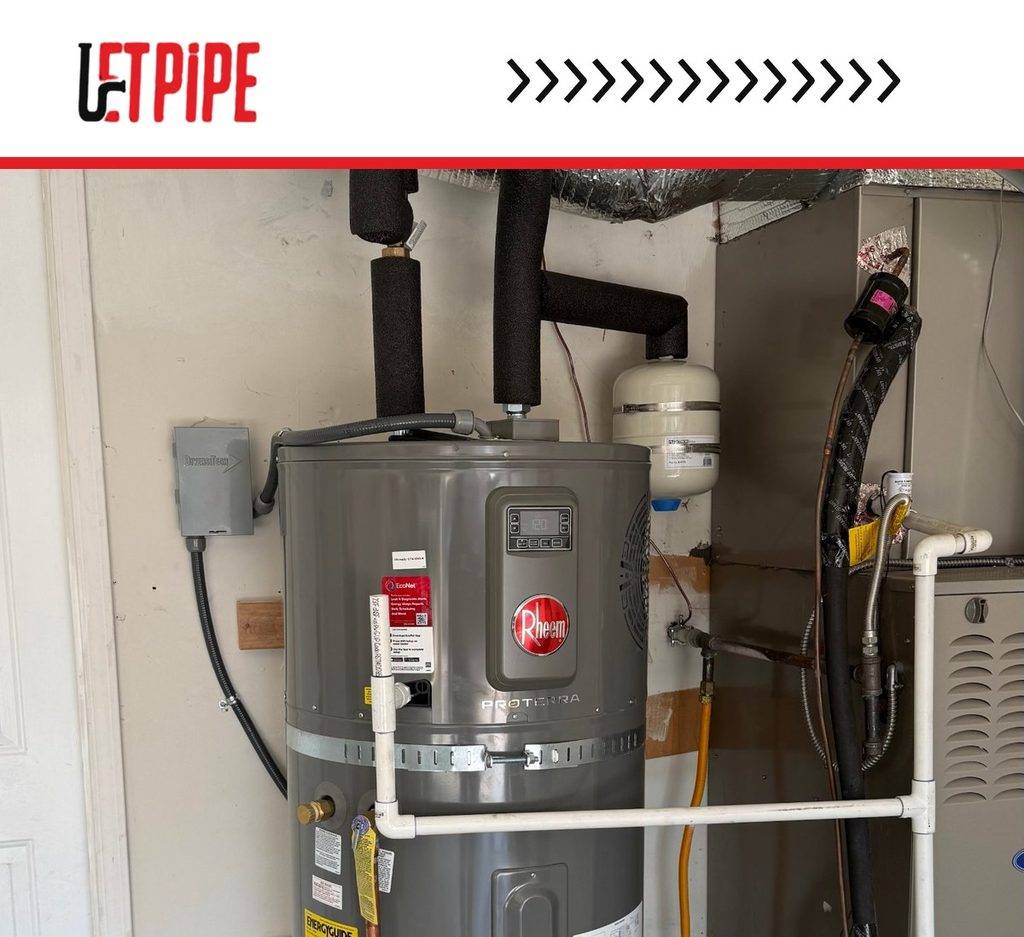
A heat pump water heater does not make heat directly. It moves heat from the air into the tank, the way a refrigerator moves heat out of its box. This approach uses less electricity. The U.S. Department of Energy says these units can be two to three times more efficient than a standard electric tank.
Air supply is the key. A fan pulls garage air through the unit. A compressor moves the heat from that air into the water. The cooler, drier air leaves the unit and returns to the garage.
The Temperature Limit
Every heat pump unit has a range of air temperatures in which the heat pump runs. The low end sits between 35°F and 45°F, depending on the model and its generation. Most current models run down to about 37°F.
Below that limit, the heat pump stops and the electric elements take over. The tank keeps making hot water. It uses more electricity until the air warms up. The spec sheet for your model lists the exact limit.
What Bay Area Winters Look Like
The average December low in Sunnyvale is about 45°F. San Jose averages a few degrees lower, in the low 40s, and nights rarely fall below 35°F. The heat pump runs through most winter days and nights. A few cold mornings may dip under the limit. On those mornings the unit uses its electric elements for a few hours.
These figures describe outdoor air. A garage runs warmer or colder depending on insulation, sun exposure, and whether it shares a wall with the house. At the estimate visit, we photograph the install location and check the code items that matter, including condensate routing and panel location.
What Winter Changes in Daily Use
Three things change when the weather cools.
The unit works harder. Colder air means more electricity for the same amount of hot water. The unit still uses less electricity than a standard electric tank while the heat pump runs.
The water arrives colder. Colder incoming water takes more energy and more time to heat.
The mode matters. Most units offer a heat pump mode, a hybrid mode, an electric mode, and a vacation mode. Hybrid mode suits most winter days. The unit picks between the heat pump and the elements on its own. Electric mode suits only the coldest stretches, when the air stays below the heat pump’s limit.
Space and Air Volume
The garage must hold enough air. ENERGY STAR says most 240-volt units need at least 700 cubic feet of air space. Some need as little as 450. A one-car garage that measures 12 by 20 feet with an 8-foot ceiling holds 1,920 cubic feet. Most garages clear the bar easily.
Some 120-volt units that replace gas tanks need more than 700 cubic feet. Check the number for the model you choose.
A closet can work too. ENERGY STAR says a closet of at least 84 cubic feet needs a fully louvered door. A ducting kit also lets some units run in a smaller space.
Clearance rules vary by model. Some newer units need no space at the sides or back. Others ask for about two feet of open space.
Noise, Cool Air, and the Drain
Noise. The fan and compressor make about as much noise as a dishwasher, near 50 decibels. Keep the unit away from a wall that backs onto a bedroom.
Cool air. The unit cools the air around it by a couple of degrees. A garage rarely notices.
Condensate. The unit makes water as it works. That water needs a drain line or pan routed to a suitable drain.
When a Garage Is a Poor Fit
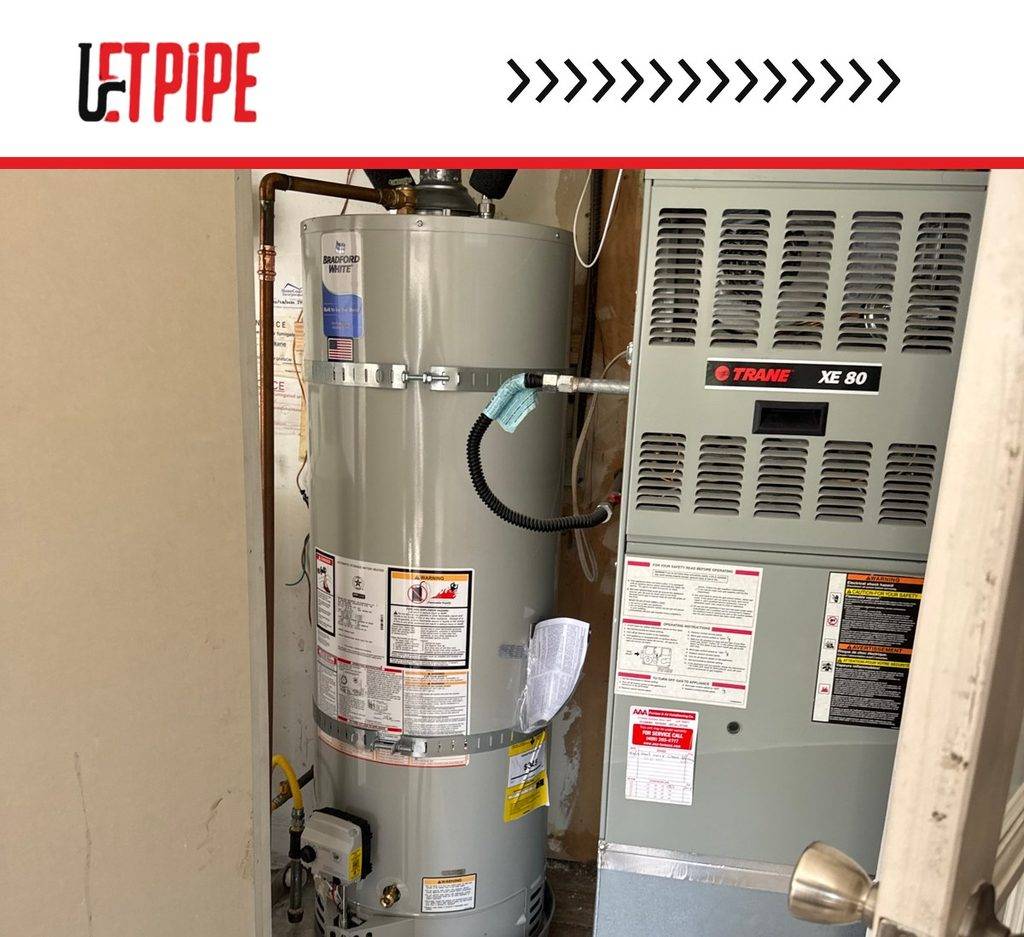
Three situations call for a different plan:
- The garage stays below the heat pump’s limit for long stretches.
- The space is tight and has no airflow.
- The garage wall backs onto a bedroom.
A ducting kit, a louvered closet, or a different location can solve each one. The site visit shows which option fits your home. If your garage looks like a good fit, the next step is understanding what the install process involves.
What Install Day Looks Like
A heat pump water heater needs a city permit before installation. The install itself takes 3 to 5 hours. A JetPipe team member attends the city inspection. Many homes can use a 120-volt plug-in model, which often avoids a panel upgrade.
Local utilities pay rebates for the switch from gas to a heat pump. Check the rebate for your city before you book. If your gas tank is getting old, our article on the adopted gas water heater rule explains the dates.
Frequently Asked Questions
Will a heat pump water heater work in a 40 degree garage?
On most current models, yes. The heat pump runs down to about 37°F. Some older models stop near 45°F. Check the spec sheet for the exact limit.
Do I lose hot water when the unit switches to electric?
No, you do not. The electric elements heat the tank the way a standard electric water heater does. You use more electricity during those hours, and the hot water keeps coming.
How loud is a heat pump water heater?
A heat pump water heater is about as loud as a dishwasher. The sound is steady rather than sharp, and most people find it easy to live with.
Can a heat pump water heater go in a closet?
It can, if the closet gets enough air. A fully louvered door or a ducting kit supplies it.
Will the unit make my garage cold?
It cools the air around it by a couple of degrees. Most garages do not notice.
Check Your Garage Before You Decide
A short visit shows whether your garage suits a heat pump. Call JetPipe Plumbing at (650) 495-4570 or get a written estimate. If you want to see what the full process looks like first, you can also read how a heat pump installation runs from first call to inspection.
Not sure your garage can run a heat pump water heater?