
A plumber ran a camera down your sewer line and gave you the news: the pipe is failing, and patching it will not hold. Your next thought was probably the front yard. The mature trees, the driveway, the landscaping you have spent years building – all of it sitting on top of the line that has to come out.
Here is the part most homeowners do not hear first. Replacing a sewer line no longer means tearing the yard open end to end. Trenchless pipe bursting can pull a new line along the path of the old one with far less digging. Here is how it works, where it fits, and where it does not.
Signs the line needs replacing, not repairing
A snake or a jet buys time on a line that is still basically sound. Once the pipe itself has broken down, cleaning it only resets the clock. These are the signs a line has reached replacement, not repair:
- The same section backs up again within weeks, no matter how often it is cleared.
- Roots keep coming back because they are entering through cracks and open joints rather than one bad spot.
- The camera shows a belly, a section where the pipe has sagged and holds standing water and waste.
- Cast iron has scaled and flaked inside until the bore is nearly choked off.
- Orangeburg pipe has softened and gone oval, or clay sections have cracked and shifted out of line.
The only way to know which of these you are facing is to look inside. A sewer camera inspection shows the real condition of the line and tells you whether a repair will hold or whether the pipe is done. That inspection is the starting point for every decision that follows.
How pipe bursting works
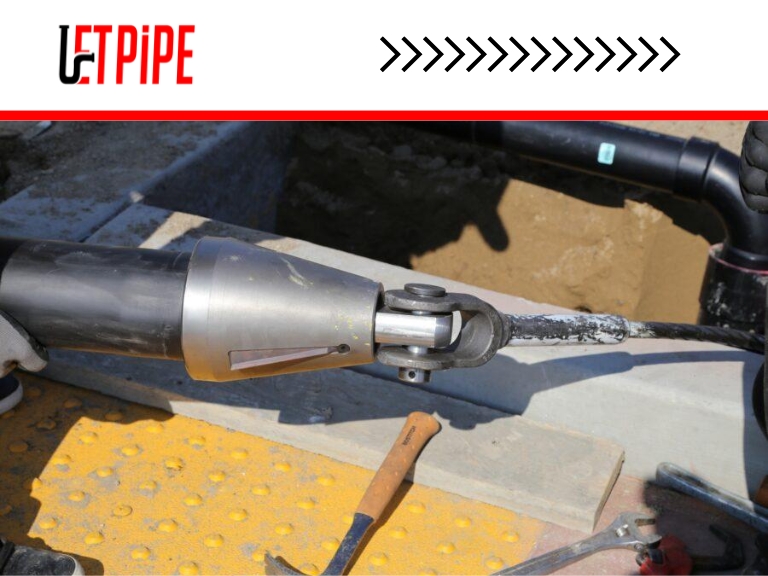
Pipe bursting replaces a sewer line from the inside out. A bursting head is pulled through the existing pipe. As it advances, it fractures the old pipe outward into the surrounding soil and, in the same pass, draws a new seamless pipe in behind it. When it reaches the far end, the old line is gone, and one continuous new pipe has taken its place, with no joints for roots to find.
We perform pipe bursting in-house with our own equipment. Underground work is never subcontracted, so the crew that inspects your line is the crew that replaces it. Pipe bursting gives you a new line while leaving most of the ground above it untouched.
Trenchless vs. an open trench
The difference shows up in three places a homeowner actually feels.
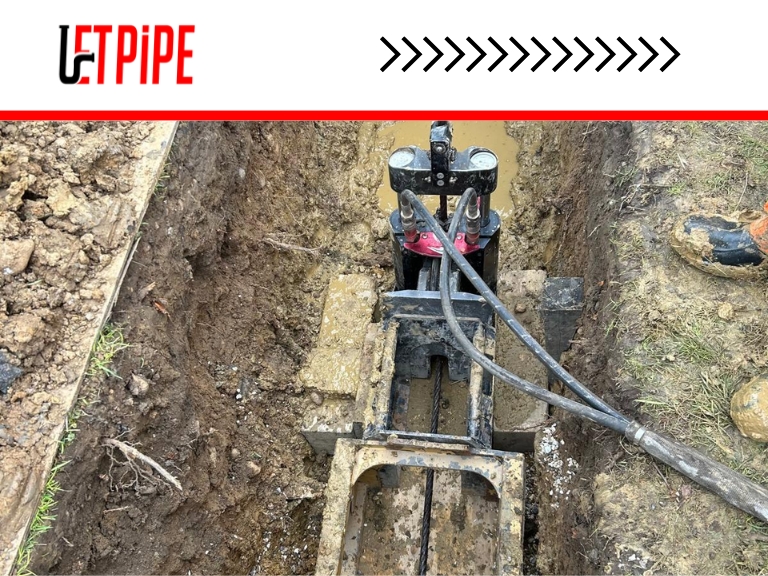
Your yard. An open trench runs the full length of the line, through lawn, plantings, walkways, and sometimes a driveway. Bursting typically needs only two small access points, one at each end. The mature trees and hardscape in between usually stay right where they are.
Time. Digging, replacing, and then restoring a full trench is a multi-day project, and the restoration alone can stretch it further. A trenchless replacement is often finished in a fraction of that.
Access. Some lines run under a patio, a slab, or a long-established tree you have no intention of losing. Trenchless reaches those lines without demolishing what sits on top. Trenchless sewer line repair and full replacement both trade a long trench for two compact access pits.
Not sure if your old Bay Area sewer line can be replaced without tearing up the yard?
We’ll inspect it and show you the no-dig option.
Which pipes we replace
Older Bay Area homes were plumbed with materials that were never meant to last forever. Trenchless replacement is a strong fit for the ones that have aged out:
- Clay, which cracks and shifts and lets roots in at nearly every joint.
- Cast iron, which corrodes and scales from the inside until it chokes the line.
- Orangeburg, a tar-and-fiber pipe that softens and deforms as it ages.
- Asbestos cement pipe, which needs to be handled and replaced properly rather than disturbed and left in place.
The old line comes out of service, and a new seamless pipe takes over the same route. When a home needs more than one branch replaced, a whole house sewer line repipe can carry the same approach across the property.
When trenchless is not the answer
Trenchless is powerful, but it is not universal. It may not be the right method when the existing line has fully collapsed and there is no path left to pull through, when the pipe needs to move to a new location instead of following its old route, or when depth, grade, or a tie-in point calls for an open excavation to do the job correctly. This is exactly why the camera comes first. The inspection tells us whether your line is a trenchless candidate before anyone commits to a method.
The local ground is part of that call. Expansive clay soil, the vertisol common across the Bay Area, swells and shrinks with the seasons and puts steady stress on buried pipe. Mature trees push roots toward any water source they can reach. Both are reasons older lines fail here, and both factor into whether trenchless or an open dig is the safer choice for your property.
| Eyebrow | Facing a failed sewer line? |
| H2 | Find out if trenchless pipe bursting can save your yard. |
| Button text | Book a Camera Inspection |
FAQ SECTION
What is trenchless pipe bursting?
It is a method of replacing a sewer line without digging a full trench. A bursting head is pulled through the old pipe, fracturing it outward while pulling a new seamless pipe in behind it. Most of the ground above the line stays undisturbed.
Will pipe bursting damage my yard or mature trees?
In most cases it needs only two small access points, one at each end of the line. Lawn, landscaping, hardscape, and established trees in between typically stay in place, which is the main reason homeowners choose trenchless over an open trench.
Can you replace clay, cast iron, or Orangeburg pipe this way?
Yes. Trenchless replacement is well suited to the aging clay, cast iron, and Orangeburg lines common in older homes. A camera inspection first confirms the line can be burst and pulled.
When do you still need to dig?
An open excavation may be necessary when a line has fully collapsed with no path to pull through, when the pipe needs to be rerouted, or when depth, grade, or a connection point calls for it. The camera inspection determines this before any work begins.
Dreading weeks of digging to replace an aging sewer line?