
Outdoor living upgrades are one of the most popular projects in the Bay Area. A permanent gas BBQ or fire pit can transform a backyard. Patios and outdoor kitchens are an investment that actually has resale value in the local housing market.
But before you start digging or connecting anything, there’s a question most homeowners don’t ask until something goes wrong: do I need a permit for this?
The short answer is almost always yes, if you’re running a new gas line. Here’s exactly what that means, what the process looks like, and what to watch out for city by city.
Portable vs. Permanent: Where the Permit Line Is
California’s permitting rules draw a clear distinction between two types of outdoor gas setups:
A freestanding propane grill using a portable 20-lb tank? No permit required. The tank is removable, the connection is temporary, and there’s no permanent gas line involved.
A built-in gas grill, natural gas fire pit, or outdoor kitchen island connected to your home’s gas supply? A plumbing permit is required. No exceptions.
The permit isn’t about the appliance itself. It’s about the gas line – the underground or above-ground pipe that runs from your meter to the outdoor connection. A licensed plumber must install it, the city must inspect it before it’s buried or covered, and pressure testing must be completed before any appliances connect.
This rule applies uniformly across incorporated cities in Santa Clara County: Sunnyvale, Mountain View, Cupertino, Santa Clara, Campbell, and others all require a gas line permit for any new permanent connection.
What the Permit Process Actually Looks Like
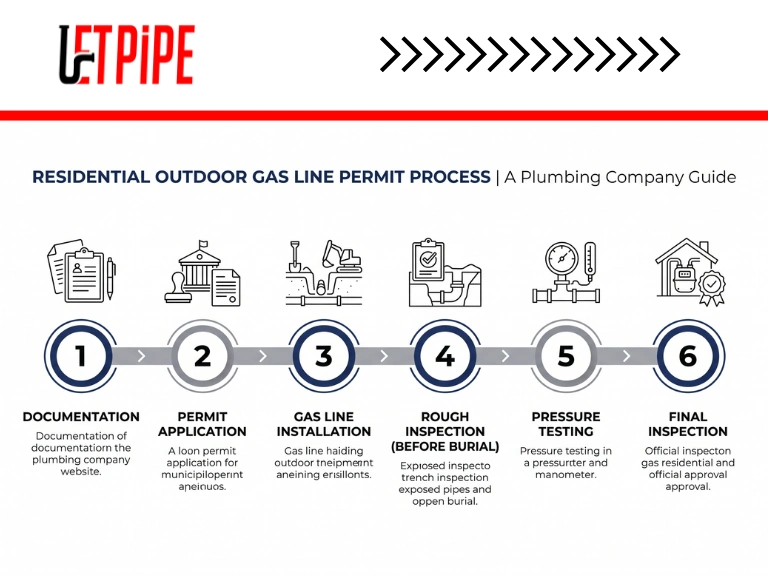
The permit process for a residential gas line extension is straightforward when handled by a licensed C-36 plumber. Here’s what it involves:
1. Scope and Documentation
Before a permit application is submitted, the gas line installation needs to be scoped: the routing of the new line, the BTU load at each appliance, and pipe-sizing calculations. Most cities require a gas piping diagram showing this information when new gas line work is permitted.
2. Permit Application
In Sunnyvale, permits are submitted through the city’s E-OneStop Online Services portal. Mountain View and Cupertino have their own permit systems. The contractor (not the homeowner) typically pulls the permit under their license.
Processing time for a straightforward residential gas line permit is usually the same day to a few business days in most Santa Clara County cities. These are trade permits, not full building permits.
3. Rough Inspection Before Burial
This is the step most homeowners don’t know about until they’ve already made a mistake. Once the new gas line is installed but before it’s buried or covered, the city inspector must come out and approve the rough installation. Burying the pipe before inspection means you may have to dig it up.
4. Pressure Test
Gas piping must be pressure-tested before appliances are connected. Typically, this means holding 3 PSI of air pressure for a minimum period with no pressure drop. An open flame is never used for leak detection – a listed leak detection solution or an electronic gas detector is required.
5. Final Inspection
Once appliances are connected and everything is operational, a final inspection closes the permit. This is when the inspector verifies the overall installation, connections, and compliance with the California Plumbing Code.
Setback and Clearance Rules You Need to Know
Permitting is one part of the equation. Placement is another. California’s Fire Code sets baseline clearance requirements, and local jurisdictions can add more.
Clearance from structures
Gas-burning fire pits and BBQs must maintain a minimum 10-foot clearance from combustible construction – wood siding, overhangs, fencing, and similar materials. This applies to any permanent gas appliance in California.
Covered installations
Installing a gas grill or fire pit under a pergola, roof extension, or covered patio is allowed, but only if the appliance is specifically listed for covered installation by the manufacturer. Clearances and ventilation requirements become more complex, and many standard fire pits are not listed for covered use.
Wildfire Risk Areas
Parts of the Santa Clara County foothills – portions of Cupertino, Los Altos Hills, Saratoga, and unincorporated county land – fall within designated Wildland-Urban Interface (WUI) zones. Additional restrictions apply in these areas, including stricter vegetation clearance requirements and limitations on certain appliance types. If your property is in a WUI zone, verify requirements with your local fire authority before purchasing equipment.
Homeowner Associations
Many neighborhoods in Sunnyvale, Mountain View, and Palo Alto have active HOAs with their own architectural guidelines. HOA approval is a separate process from city permitting and should be initiated in parallel, not after. Waiting for a permit before submitting to the HOA adds weeks to a project timeline.
Adding a gas BBQ or fire pit but stuck on the permit?
We’ll run the line to code and handle the county paperwork.
City-by-City Notes for Santa Clara County
While the underlying California Plumbing Code is consistent statewide, each city administers permits independently. A few things worth knowing:
- Sunnyvale: Permits submitted through E-OneStop Online Services. Gas line permits are a standard plumbing trade permit. Inspections required at rough and final stages. Contact: One-Stop Permit Center at City Hall, 456 W. Olive Ave., (408) 730-7444.
- Mountain View: Same-day building permits are available for certain gas line work. A new gas line to supply an outdoor appliance falls under standard gas permit requirements. Details at developmentpermits.mountainview.gov.
- Cupertino: Standard plumbing permit required for new gas line work. Contact the Community Development Department for current processing times.
- Santa Clara, Campbell, Los Altos: Permitting handled through each city’s building department. All follow California Plumbing Code requirements for gas line installation and inspection.
- Unincorporated Santa Clara County: Projects in unincorporated areas are permitted through the County’s Department of Planning and Development. Note that the County’s all-electric reach codes apply to new construction in unincorporated areas, though these do not affect gas line work on existing residential properties.
What Happens If You Skip the Permit
Unpermitted gas work is one of the more serious issues that surfaces during a home sale in California. Real estate disclosures require sellers to identify unpermitted work. A gas line that was installed without a permit and inspection is a liability both for the sale and for insurance purposes.
If a gas leak or fire occurs and the investigation reveals an unpermitted installation, homeowner’s insurance may deny the claim. This is not a theoretical risk.
Beyond the sale and insurance implications, there’s the obvious practical issue: gas lines that were never pressure-tested and inspected carry real safety risk. The inspection process exists specifically to catch mistakes before they’re buried underground.
How JetPipe Handles Outdoor Gas Line Installations
JetPipe Plumbing installs gas lines for outdoor BBQs, fire pits, outdoor kitchens, pool heaters, and patio heaters throughout Sunnyvale, Mountain View, Cupertino, Santa Clara, Campbell, Palo Alto, and surrounding communities.
Here’s what the process looks like when you work with us:
We pull the permit
As a licensed California C-36 plumbing contractor (License #1139033), JetPipe handles the permit application under our license. You don’t have to navigate the city portal or figure out what documentation is required. We submit the gas piping diagram and coordinate with the permit center.
We route the line correctly
Routing a gas line from your home’s meter to an outdoor location involves decisions about pipe material, depth, sizing based on BTU load, and protection where the line transitions above ground. These aren’t guesses – they’re calculations based on the California Plumbing Code and the specific appliance you’re connecting.
We coordinate the inspections
We schedule the rough inspection at the right point in the project before backfill. We’re present for it. And we handle the final inspection once everything is connected and operational. You don’t have to track down an inspector or re-dig a trench because the inspection window was missed.
We pressure test the line
Before any appliance connects to the new gas supply, we pressure test the line. This is required by code, and it’s how we verify that every fitting and joint is leak-free.
Whether you’re planning a simple natural gas BBQ connection or a full outdoor kitchen with a grill, side burner, and fire pit table, the gas line work is the part that requires a licensed contractor and a permit. The rest – appliance selection, design, and hardscaping – can often be handled separately.
If you’re in the planning stages and want to understand what a gas line extension would involve for your specific yard and setup, call JetPipe at (650) 800-6877 or reach us at jetpipeplumbing@gmail.com. We’re based in Sunnyvale and serve the full South Bay and Peninsula.
For main water lin Peninsula.
Frequently Asked Questions
Do I need a permit to connect a natural gas BBQ grill in my backyard?
Yes. Any new permanent connection to your home’s natural gas supply requires a plumbing permit in Santa Clara County cities. This applies regardless of whether the grill is freestanding or built-in, as long as it connects to a dedicated gas line.
Can I use a propane tank instead of running a gas line to avoid a permit?
A portable propane setup using a removable tank doesn’t require a permit. However, if you want a permanent, buried gas line to your outdoor area, even to a propane-converting appliance, a permit is still required for the line itself.
How long does a gas line permit take in Sunnyvale or Mountain View?
For a residential gas line extension, permit processing is typically same-day to a few business days. The larger time variable is the inspection schedule. Rough inspections generally happen within a few business days of scheduling. Your contractor can tell you current wait times when they pull the permit.
Can I install a gas fire pit under my pergola?
Only if the fire pit unit is specifically listed by the manufacturer for covered installation. Many residential gas fire pits are not. Check the appliance’s listing documentation before purchasing equipment for a covered outdoor space.
Who can install a gas line? Can I do it myself?
In California, gas line installation must be performed by a licensed contractor. Homeowners can pull permits as owner-builders for work on their primary residence, but gas work carries significant safety implications. If an inspection fails or a leak occurs, liability rests with whoever did the work. Licensed contractors carry insurance that covers these situations.
Does JetPipe serve my city?
JetPipe Plumbing serves Sunnyvale, Mountain View, Cupertino, Santa Clara, Campbell, Palo Alto, Los Altos, Milpitas, Fremont, San Jose, San Mateo, Redwood City, and surrounding South Bay and Peninsula communities.
Want a gas grill or fire pit — without the code headaches?