
The tank in the garage is getting old. The second shower of the morning runs lukewarm, and you have already decided the next water heater will be tankless. Endless hot water, a unit the size of a suitcase on the wall, and a closet you get back.
All of that is real. What catches people off guard is the part nobody mentions in the showroom: in an older house, a tankless water heater is rarely a one-for-one swap. The unit itself goes up in an afternoon. The house around it often needs to change first.
Here is what a licensed plumber checks before recommending tankless in an older South Bay or Peninsula home, and why each item matters.
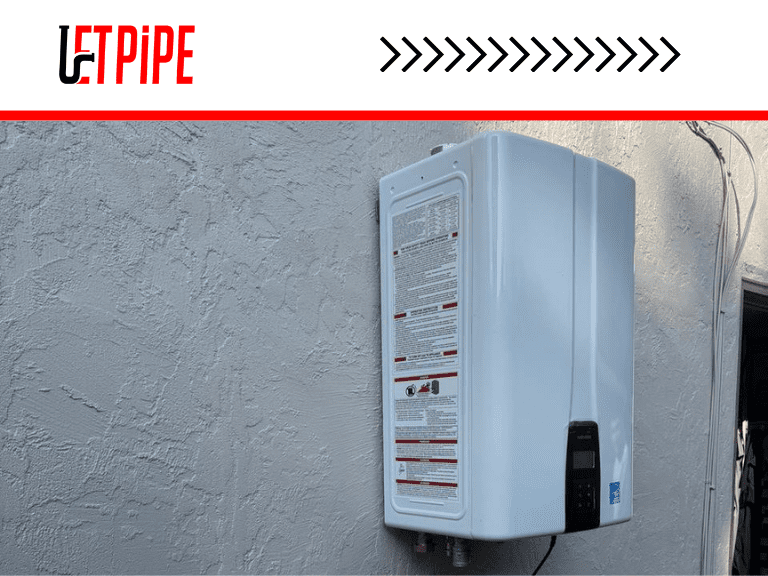
Why it is not a simple swap
A tank water heater heats slowly and stores what it makes. A tankless unit heats water at the moment you open the tap, which means it has to deliver all of that heat in seconds.
To do that, it burns far more gas while it runs. A typical tank draws around 40,000 BTU per hour. A whole-house tankless unit draws up to 199,000. That is roughly five times the demand, through piping that was sized decades ago for the smaller number.
Everything else follows from that difference: the gas line, the gas meter, the venting, and even a drain line the old tank never needed.
The gas line: the item that decides the job
In most older homes the water heater sits at the end of a half-inch gas branch. That line was sized for a tank, and it usually shares the supply with a furnace, a range, and a dryer.
A tankless unit on an undersized line does not fail outright. It starves. The flame cannot reach full output, the water comes out cooler than the setpoint under heavy use, and the unit throws error codes on cold mornings when the furnace is running too.
What the plumber measures before quoting:
- Pipe diameter and length from the gas meter to the water heater location. The longer the run, the larger the pipe has to be.
- Total load of every gas appliance in the house running at once.
- Meter capacity. A standard residential meter has a limit, and adding a tankless unit can push the house past it. When that happens, the utility upgrades the meter.
The outcome is usually one of three things. The existing line is adequate, which happens when the heater sits close to the meter. A section of the line has to be replaced with a larger size. Or a new dedicated line is run from the meter to the unit.
Some tankless models are approved for a half-inch line over a short run, which can save a gas line upgrade in the right house. That is a model-by-model question, and it should be answered from the manufacturer’s table, not by guesswork.
If the line does need work, our licensed plumbers handle it as part of the same project. We cover what that involves on our gas line installation page.
Venting: the old flue cannot be reused
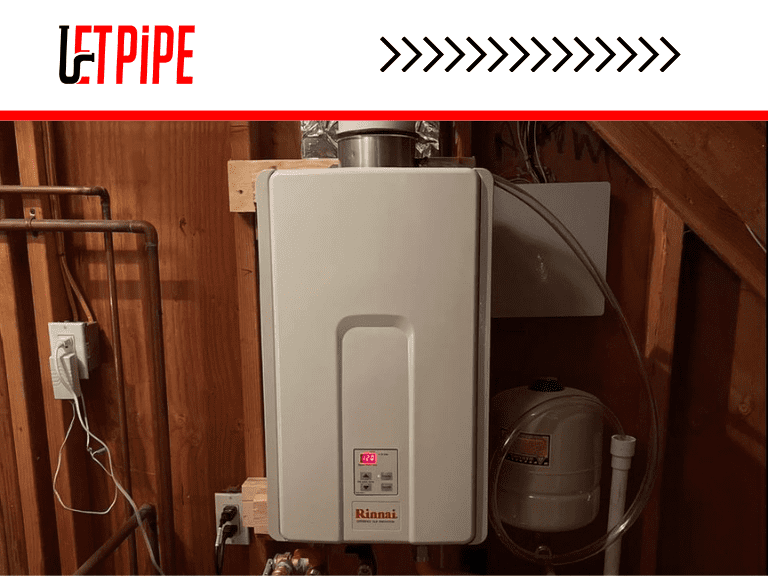
A tank water heater vents through a metal flue that rises through the roof and relies on hot exhaust drifting upward. A tankless unit pushes its exhaust out with a fan, at a different temperature and pressure. The old flue is not rated for it.
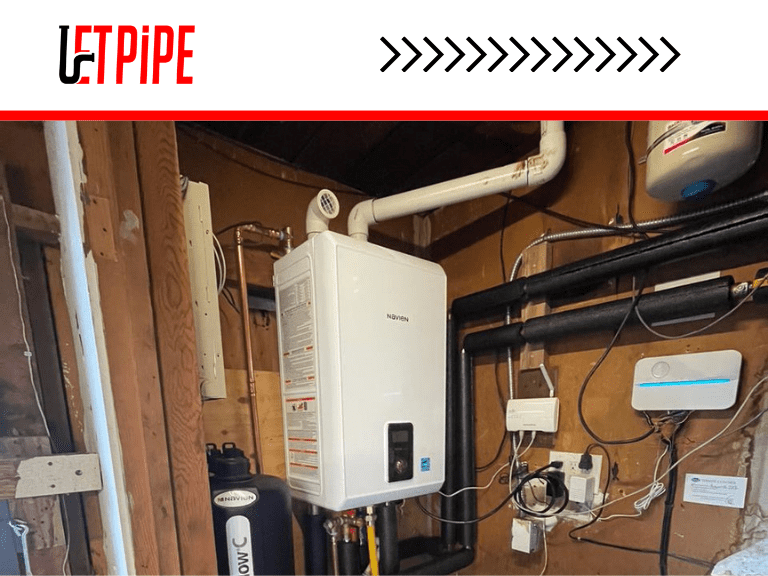
A modern condensing tankless unit uses sealed plastic vent pipe, with one path for exhaust and one for fresh combustion air. That pipe can go out through a side wall or up through the roof, which gives more freedom in where the unit sits. It also means a new wall or roof penetration, placed at the required distance from windows, doors, and property lines.
There is one more option that suits this climate well. Outdoor tankless models mount on an exterior wall and need no vent pipe at all. In the mild winters of the South Bay, that is often the simplest installation in a house where interior venting would be awkward.
Three small things the old tank never needed
A condensate drain. Condensing units pull so much heat from the exhaust that water forms inside the unit. That water is mildly acidic and has to be neutralized and piped to a drain.
A power outlet. The fan, the controls, and the ignition all run on standard household power, so the unit needs an outlet within reach. It also means no hot water during a power outage unless a battery backup is added.
Service valves. A tankless unit is installed with isolation valves on the water lines so it can be flushed. Without them, routine maintenance turns into a plumbing job.
Where the unit can go
Because it hangs on a wall, a tankless unit does not have to sit where the tank sat. Moving it closer to the gas meter can shorten the new gas line. Moving it closer to the bathrooms can shorten the wait for hot water.
Relocation adds work, though. New water lines, new gas piping, and new venting all have to reach the new spot. Keeping the unit in the original location is usually the faster route.
Hard water: the part that decides how long it lasts
Water across Santa Clara County is hard, and in some neighborhoods very hard. In a tank, the minerals settle to the bottom as sediment. In a tankless unit there is nowhere for them to settle. They bake onto the inside of the heat exchanger, the narrow passages where the water is actually heated.
Scale there does two things. It insulates the metal, so the unit burns more gas for the same hot water. And it narrows the passages, which cuts flow and eventually triggers overheating shutdowns.
A tankless water heater can last 15 to 20 years or more. In local water, it gets there only with a plan:
- Flush the unit on a schedule. A descaling flush circulates a cleaning solution through the heat exchanger. In hard water areas, once a year is the usual interval. Our tankless maintenance page explains what the visit includes.
- Treat the water before it reaches the unit. A water softener or a scale filter on the supply side slows the buildup and protects every other fixture in the house at the same time.
For the full picture of what local water does to water heaters, see our article on hard water in Santa Clara County.
Sizing: think in gallons per minute
A tank is sized by how many gallons it holds. A tankless unit is sized by how many gallons per minute it can heat. The question is not how much hot water the household uses in a day. It is how much runs at the same moment.
Two showers and a dishwasher at once is a very different demand from one shower at a time. Count the fixtures that realistically overlap on a busy morning, and size for that. An undersized unit will not run out of hot water, but it will deliver it lukewarm when too many taps are open.
The wait for hot water does not go away
Tankless means endless, not instant. The water still has to travel from the unit to the faucet, and the unit takes a few seconds to fire. In a long single-story house, the wait at the far bathroom can feel longer than it did with the tank.
The fix is a recirculation system, which keeps hot water moving through the lines so it is ready at the tap. Several tankless models have a recirculation pump built in. If the wait matters to you, raise it at the estimate so the right model is chosen from the start.
When tankless is the right call, and when it is not
| Your situation | What usually fits best |
|---|---|
| Large household that runs out of hot water | Tankless |
| Water heater near the gas meter or on an exterior wall | Tankless, with a simpler installation |
| Tight closet or garage where floor space matters | Tankless |
| Planning to stay in the home for many years | Tankless |
| Long gas run and a meter already near its limit | Compare the gas line cost before deciding |
| Small household with modest hot water use | A correctly sized tank often does the job |
| Interested in moving from gas to electric | A heat pump water heater |
How a tankless installation runs
At JetPipe Plumbing, a tankless water heater installation starts with a free on-site assessment. We measure the gas line, check the meter, look at the venting route, and test the water. You get a written price that already includes any gas line or venting work, so nothing is added halfway through the job.
A permit is required, and we handle the paperwork. When the unit stays in the original location, the installation takes one day. After the install, the city inspects the work, and a JetPipe employee attends the inspection with the documentation.
We are a Navien-certified installer and also install Rinnai, Noritz, and Rheem tankless units. Installation work carries a one-year labor warranty. Financing is available.
JetPipe Plumbing is a family-owned, licensed plumbing contractor (C-36 #1139033) based in Sunnyvale, serving the South Bay and the Peninsula. We are open 7:00 AM to 10:00 PM every day. Call (650) 495-4570 or get a water heater quote online.
Frequently asked questions
Will I need a new gas line for a tankless water heater?
You may need a new gas line, but not every home does. It depends on the diameter and length of the existing line and on the other gas appliances in the house. A plumber confirms it with a load calculation before giving a price.
Can a tankless water heater use my old vent?
No, a tankless water heater cannot use the vent from an old tank. The exhaust is pushed out by a fan and needs sealed vent pipe rated for it. An outdoor model avoids vent pipe entirely.
How often does a tankless water heater need to be flushed?
A tankless water heater in a hard water area should be flushed about once a year. Homes with a water softener can often go longer between flushes.
Does a tankless water heater work during a power outage?
No, a tankless water heater does not work during a power outage, because the controls and the fan need electricity. A battery backup can keep it running.
How long does it take to install a tankless water heater?
Installing a tankless water heater takes one day when the unit stays in the same location. Moving it to a new spot or running a new gas line adds time.
Will a tankless water heater give me instant hot water?
No, a tankless water heater gives endless hot water, not instant hot water. The water still has to travel through the pipes. A recirculation system is what shortens the wait.
Before you buy the unit
Find out what your home needs before you switch to tankless
A licensed JetPipe plumber checks your gas line size, vent route and water hardness, then gives you a written estimate that covers everything the install involves. Call (650) 495-4570, seven days a week from 7:00 AM to 10:00 PM.