
The shower has been getting weaker for a while. Not overnight, which is why nobody said anything. Then somebody runs the kitchen faucet while you are rinsing shampoo out of your hair and the water goes to a trickle.
Or you come back from a week away, turn on the tap, and the first few seconds run brown.
Both of those point in the same direction in an older house. The pipes are still there, but there is less and less room inside them.
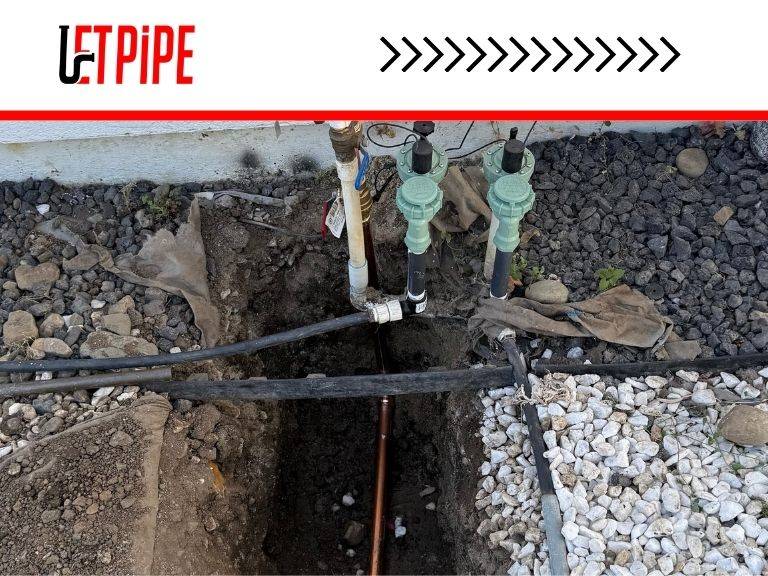
Why so many homes here have galvanized pipe
Galvanized steel was the standard for residential water lines through most of the last century. It is steel pipe dipped in molten zinc, and the zinc is the part that matters. It corrodes instead of the steel underneath, which buys the pipe several decades of service.
Plenty of houses in Sunnyvale, Santa Clara, and across the Peninsula were plumbed with it. If your home was built before the copper era and has never been repiped, there is a good chance some of it is still in the walls.
The problem is not that the material was bad. The problem is that the zinc layer was always temporary, and on most of these homes it ran out a long time ago.
What the inside of an old pipe actually looks like
Once the zinc is gone, water meets bare steel and rust starts forming on the inner wall.
Rust does not stay smooth. It builds outward in hard, crusty nodules, a process plumbers call tuberculation. Picture the inside of a pipe slowly growing coral. A three-quarter-inch line ends up with a half inch of open channel, then a quarter, then less.
Nothing about this is visible from the outside. The pipe looks fine right up until you cut a piece out and hold it to the light.
Two things follow from that narrowing. Water moving through a smaller opening arrives with less pressure at the fixture. And pieces of that rust break loose and travel, which is the brown water and the grit in your aerator screens.
Brown water and weak pressure in a South Bay home built before 1980?
That’s galvanized pipe corroding from the inside. We replace it in 1 to 3 days.
Why the hot side usually goes first
Heat accelerates corrosion, so hot water lines typically deteriorate ahead of cold.
That gives you a useful test. Run the cold at a faucet and note the flow. Then run hot. If the hot side is noticeably weaker at the same fixture, the piping is a likely suspect, not the city main and not your pressure regulator.
Hard water makes it worse. Mineral scale layers on top of the rust nodules, and the two build on each other.
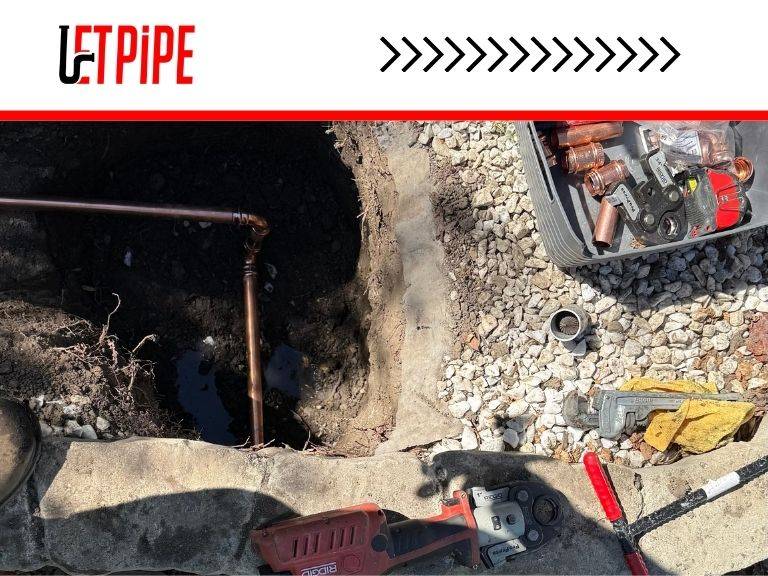
Sorting rusty water from a rusty water heater
Discolored water does not always mean the pipes. A corroding water heater tank produces the same brown tint, and homeowners regularly repipe when the real culprit was in the garage.
The difference shows up in a simple check. If only the hot water runs brown and the cold is clear, look at the water heater first. Its anode rod may be spent and the tank corroding from the inside.
If both hot and cold run discolored, especially after the house has sat unused for a few hours, the supply piping is the more likely source.
Water that clears after thirty seconds and stays clear points to sediment settling in the lines overnight. Water that stays brown the whole time you run it is a different and more urgent conversation.
The mixed-metal problem
Somewhere in many of these houses, someone connected copper to the existing galvanized line during a remodel or a repair.
Two dissimilar metals in contact with water create a small electrical current, and that current eats the steel side of the joint. The corrosion concentrates right at the connection. Unless a dielectric fitting was used to separate them, that junction is often the first spot to fail.
A house with a patchwork of partial repairs frequently has several of these. Each one is a future leak with a known location.
Things that look like a galvanized problem but are not
Before assuming the worst, a few cheaper explanations deserve a look.
Faucet aerators and shower heads clog with mineral debris and cut flow at a single fixture. If the pressure problem is at one tap only, start by unscrewing the aerator and rinsing it.
A failing pressure regulator, the valve where water enters the house, drops pressure everywhere at once and is a much smaller repair than a repipe.
The underground line from the meter to the house can also be the restriction, particularly if it is galvanized or has been damaged by roots or settling soil. That is a separate job from the piping inside your walls, and we handle it on the water line repair side.
Whole house pressure that is low at every fixture, hot and cold alike, is worth measuring with a gauge before anyone opens a wall.
How a plumber confirms it
Guessing is not necessary here. There are three things that settle the question.
A gauge at the hose bib gives static pressure entering the house, which separates a supply problem from a piping problem. Visible pipe in the garage, crawlspace, or under the sink can be identified by material on sight since galvanized is dull gray steel and takes a magnet, unlike copper.
The definitive answer comes from cutting out a short section and looking inside it. In a house with restricted flow and discolored water, that cross section usually ends the debate immediately.
Repair a section or repipe the house
Replacing a single failed length of galvanized pipe is possible and sometimes the right call, particularly if you have one leak and the rest of the system still flows well.
The honest caveat is that all of the piping in that house is the same age and has been sitting in the same water. Fixing one section often just moves the pressure to the next weakest point. Homeowners who patch repeatedly tend to spend more over a few years than a full repipe would have cost.
The math changes when the house is already showing symptoms in multiple places. Weak flow throughout, brown water, and a history of pinhole leaks together point toward replacing the system rather than chasing it.
Our water line repiping page walks through how we scope these jobs.
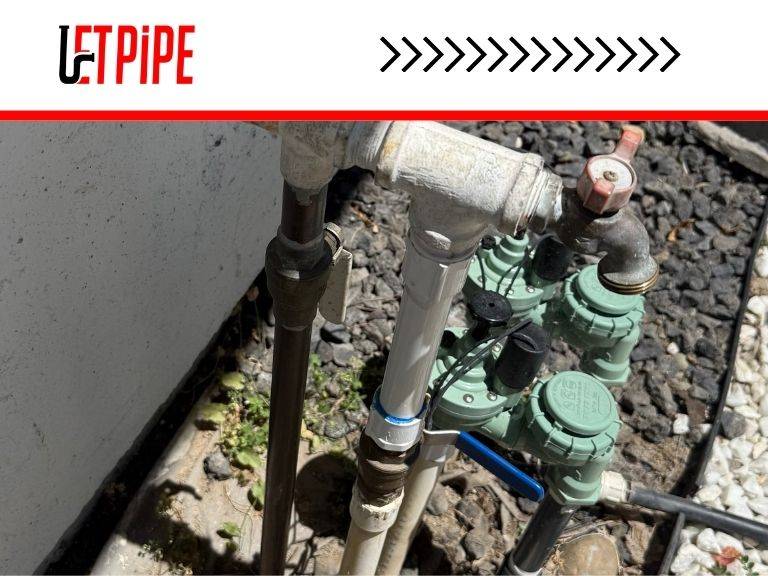
Copper or PEX
Both are good materials and the choice usually comes down to the house.
Copper is rigid, long-lived, and handles heat well. It is the traditional choice, it holds up in exposed runs like garages and crawlspaces, and it does not care about sunlight. Our copper repipes carry a warranty of up to 25 years. It transfers to a new owner when the plumbing is serviced by JetPipe.
PEX is flexible tubing that can be routed through existing framing with far less cutting. Fewer wall openings means less drywall repair and often a shorter job. It also has a natural resistance to the scale buildup that hard water causes.
Many repipes here end up using both, with copper in exposed and high-heat areas and PEX in the concealed runs. A plumber who only offers one material is choosing for their convenience, not yours.
What the job actually involves
A whole house repipe is disruptive but predictable, and knowing the shape of it removes most of the anxiety.
Access openings get cut in walls and ceilings along the pipe routes. New lines are run, connected, pressure tested, and inspected under permit. Water is off during the working part of each day and back on in the evening in most cases. Openings are then patched, textured, and left ready for paint.
Most single-family homes are done in a matter of days, not weeks. The variables are the number of bathrooms, whether the house is on a slab or has a crawlspace, and how much of the original piping is buried in finished areas.
Where to start
If your pressure has been fading and you are seeing color in the water, the useful first step is not a quote. It is a diagnosis.
Have someone measure incoming pressure, check the material and condition of visible piping, and rule out the regulator, the aerators, and the water heater. That takes one visit and tells you whether you are looking at a small repair or a planned project. Whole house water line replacement is worth scoping properly before it becomes something you handle on a bad morning.
JetPipe Plumbing repipes older homes across Sunnyvale, the South Bay, and the Peninsula in copper and PEX, permitted and inspected. Same-day service is available for leaks, and estimates are free.
Not sure if you need a full repipe or just one more patch job?