
You have run the snake down the same line twice this month. The sink drains fine for a week, maybe two, then the water starts pooling again. If you are stuck in that cycle, the problem is probably not sitting where the cable can reach it. It is coating the pipe walls, and a cable was never built to clean walls.
This is a common story across the Bay Area, where hard water and aging pipes work against your drains at the same time. Here is why a snake keeps falling short, what hydro jetting does differently, and how to tell which one your line actually needs.
Why a snake clears a hole, not the pipe
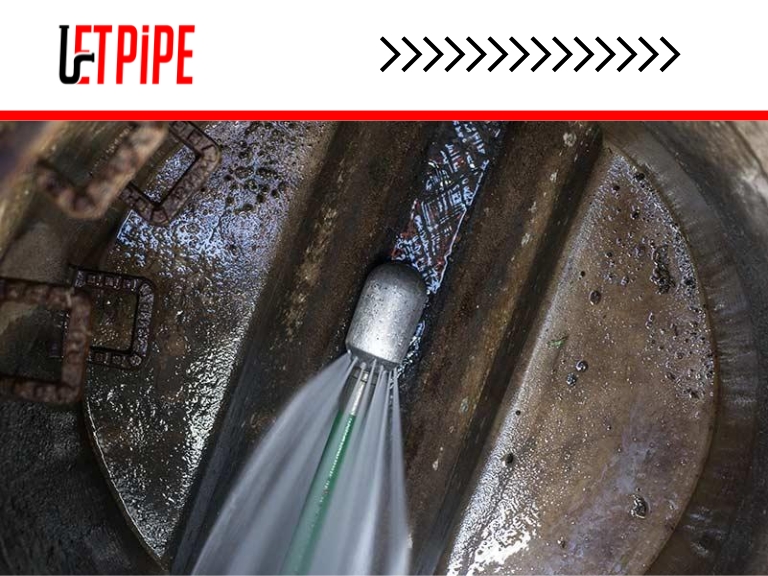
A drain snake, also called a cable or auger, works by pushing a rotating tip through a blockage. When it reaches a clog, it bores through the middle or hooks the debris and pulls it back. That is genuinely useful for a solid obstruction like a mass of hair or a dropped object, and it is often the right first move. A mechanical rooter service handles exactly that kind of point blockage.
The limit is built into how it works. A cable punches a channel through the middle of the buildup. Water starts flowing again because it has found a path, so the drain looks fixed. Meanwhile, the layer of grease, sludge, or mineral scale lining the pipe wall is still there. Within days or weeks it closes the opening back down, and you are standing over the same slow drain. A snake reopens the hole. It does not clean the pipe.
What hydro jetting does differently
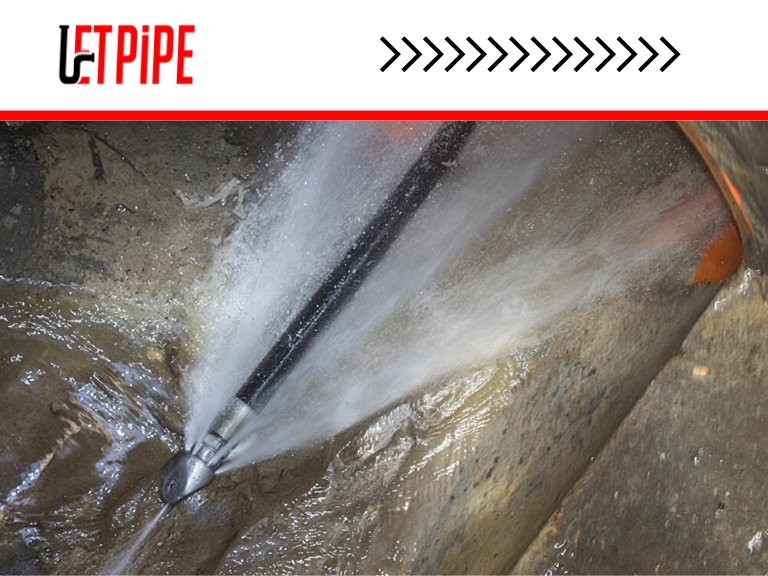
Hydro jetting uses a high-pressure stream of water, delivered through a specialized nozzle, to scour the full inside diameter of the pipe. Instead of drilling one narrow channel, it strips the walls clean and flushes everything downstream. When the job is finished, the line is far closer to its original bore than a cable can get it. This is why hydro jetting for main drain lines tends to be the fix that finally holds on a recurring clog: buildup has to start over from bare pipe instead of picking up where it left off.
We perform hydro jetting in house with our own equipment, so it is a direct part of our drain cleaning service, not a job we hand off to someone else.
Where Bay Area lines really need it
Three problems respond to jetting far better than to a cable, and all three are common in local homes.
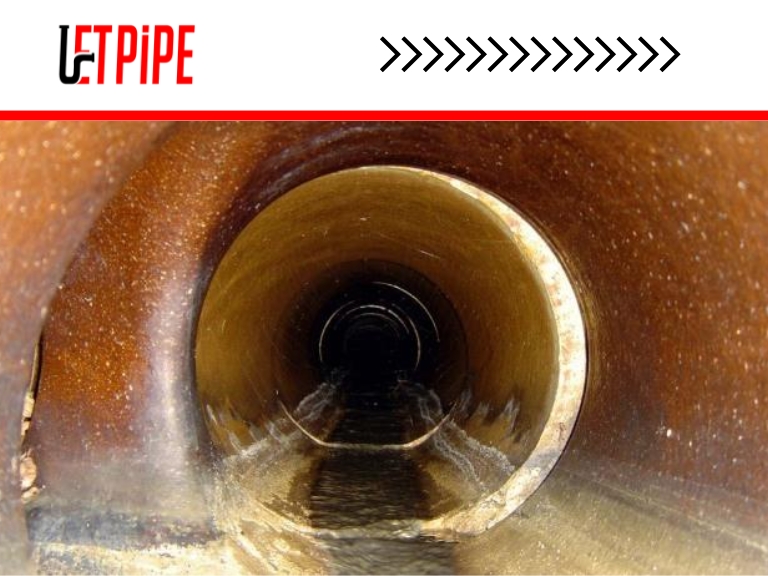
Grease in kitchen lines
Cooking fat washes down warm and liquid, then cools and hardens against the pipe wall. Over months it builds into a dense coating that a cable slips right past. A jet emulsifies that grease and carries it out, which is why kitchen lines are one of the most common reasons a homeowner finally moves from snaking to jetting.
Mineral scale from hard water
Bay Area tap water runs roughly 7 to 19 grains per gallon, which is hard by any measure. Over time, dissolved minerals deposit inside drain and sewer lines and slowly shrink the passage. A cable cannot scrape a wall clean, so scale keeps narrowing the pipe until flow suffers. High-pressure water can clear that deposit and open the line back up.
Roots and older pipe
Much of the local housing stock dates to the postwar decades, and a lot of it still runs on cast iron or clay sewer lines. Those older materials corrode and crack, joints loosen, and tree roots find their way in through the seams. Jetting cuts fine root intrusion and flushes out the debris the roots have trapped. For a heavier root mass, a mechanical rooter may run first to open the line before the jet finishes cleaning the walls.
Keep snaking the same drain and it keeps clogging?
We’ll hydro jet it clean — right down to the pipe walls.
When a camera comes first
Older cast iron and clay pipe is not always strong enough for high pressure. If a line is badly corroded, cracked, or partly collapsed, jetting it blind is a risk. That is why a sewer camera inspection often comes before the jet in an older home. The camera shows the real condition of the pipe, confirms what is actually causing the clog, and tells us whether jetting is safe or whether the line needs repair instead. It also means you are not paying to jet a pipe that really needs replacing.
When to call a professional
A plunger or a hand auger is fine for the occasional slow drain. It is time to call for professional help when the same line clogs again soon after you clear it, when more than one fixture backs up at once, when you hear gurgling or smell sewage, or when an older home has never had its main line properly cleaned. Those are signs the trouble is in the line itself, not at the fixture, and that is where jetting earns its place.
Hydro jetting is powerful, and in the wrong hands on the wrong pipe, that power can do damage. Done correctly, on a line a camera has confirmed can take it, it is the most thorough drain cleaning available.
| Eyebrow | Stubborn drain that keeps coming back? |
| H2 | Clear it at the source with professional hydro jetting. |
| Button text | Request Hydro Jetting |
FAQ SECTION
How is hydro jetting different from snaking a drain?
A snake bores a channel through a clog so water can pass. Hydro jetting uses high-pressure water to clean the full inside of the pipe, removing the grease, scale, and debris coating the walls. Snaking reopens flow. Jetting restores the pipe.
Is hydro jetting safe for older Bay Area pipes?
On a sound pipe, yes. On corroded cast iron or cracked clay, high pressure can cause damage, which is why we recommend a sewer camera inspection first on older homes. The camera confirms the pipe can handle jetting before we begin.
How often do drain lines need hydro jetting?
It depends on the line and the household. Kitchen lines that collect grease and homes on hard water may benefit more often, while a main line can go much longer. A camera inspection helps set the right interval for your home.
Can hydro jetting remove tree roots?
It can cut and flush fine root intrusion and clear the debris roots trap. For a heavier root mass, a mechanical rooter may run first to open the line, followed by jetting to finish cleaning the walls.
Snaking didn’t solve your stubborn drain?