
The question that comes up before almost every repipe appointment is some version of the same thing: do we have to move out?
The short answer is no. A professional whole-house repipe is designed to be completed while you stay home. Water is shut off during work hours and restored each evening. Most projects in standard Bay Area single-family homes finish the pipe installation in one to three days, with a separate visit for drywall patching after inspection.
But knowing you can stay home and knowing what each day actually looks like are different things. This article walks through the full repipe process day by day so there are no surprises and you can plan your household around it.

Before the Crew Arrives: The Permit and Estimate
A legitimate repipe begins with a permit. In Santa Clara County a plumbing permit is required before any pipe replacement work starts. Your contractor pulls that permit under their license before the crew sets foot in your home.
The estimate visit, typically done a few days or a week before the job, establishes the scope: how many fixtures, what material (copper or PEX), access requirements, and a realistic timeline for your specific home. A one-story, three-bedroom home in Sunnyvale with a crawl space is a different project from a two-story home in San Jose with finished walls and slab-on-grade construction.
Use the estimate visit to ask about the daily schedule. You want to know: What time does the crew arrive? When does water shut off each day? When is water restored? How many people will be on site? Which areas of the house will be open on which day?
A contractor who cannot answer those questions clearly before the job starts is not well organized enough to minimize disruption inside your home.
The Day-by-Day Timeline
The timeline below is based on a typical Bay Area single-family home: three to four bedrooms, two bathrooms, one or two stories, and replacing galvanized or aging copper supply lines with new copper or PEX. Adjust for your specific home size.
Day 1: Protection, access, and the bulk of the installation
The crew arrives in the morning typically between 7:30 and 8:30 a.m. The first thing they do before touching a wall is protect the house. Plastic sheeting goes down on floors along the work path. Furniture in work areas gets covered. This is not optional prep work; it is a direct indicator of how the rest of the job will go.
Water shuts off at the main shortly after the crew arrives. This is the longest shutoff of the project – expect to be without water for most of the working day.
The bulk of Day 1 is installation. The crew opens targeted access points in walls, ceilings, and under-floor areas where the new supply lines need to run. In homes with a crawl space, much of the work happens below the floor without touching walls at all. In slab homes or two-story homes, more wall access is needed.
New lines are run from the water heater location out to each fixture group – kitchen, bathrooms, and laundry. The crew works methodically from one zone to the next. Old galvanized or copper pipes are typically cut and left in place rather than removed, since extraction from finished walls adds time and damage without plumbing benefit.
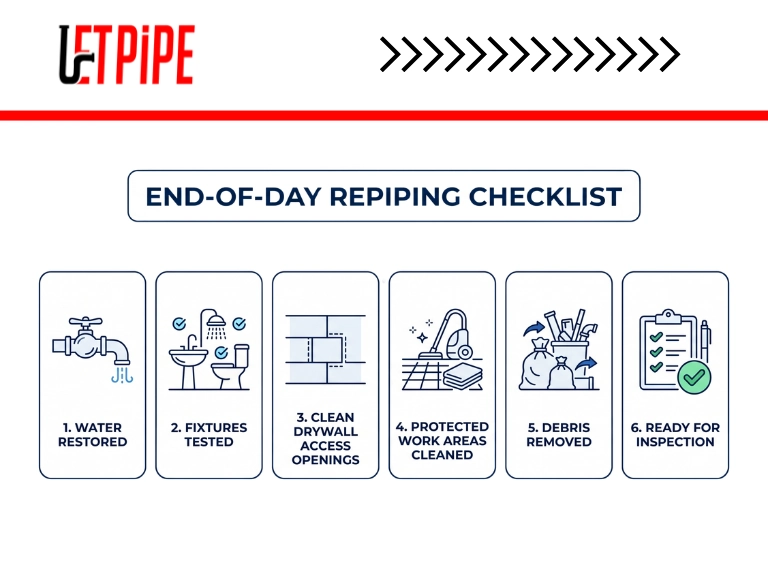
By late afternoon, the new lines are roughed in, and the crew begins connecting fixtures. Water is restored before the crew leaves for the day. You will have running water that evening and overnight. The pressure may feel noticeably different, often better, immediately.
The house will look disrupted at the end of Day 1. There will be open access holes in walls, removed cabinet kickplates, and exposed pipe runs in utility areas. This is normal and expected. Nothing is patched yet – patching happens after inspection, which has not occurred yet.
Day 2: Completion, cleanup, and preparation for inspection
In most average Bay Area homes, Day 2 finishes what Day 1 started. This is typically a shorter day on site.
The crew returns to complete any remaining connections – the water heater, exterior hose bibs, and appliance lines. They pressure-test the new system, which involves running the lines at operating pressure and checking every connection for any sign of weeping. If a joint needs adjustment, it is addressed before anyone leaves.
All accessible shut-off valves are checked and replaced if they are stiff or non-functional. This is often when homeowners notice how many valves in the house were not actually closing all the way.
The crew cleans up the work areas – collects copper offcuts, seals debris bags, and removes sheeting. The access holes remain open. This is intentional. The city inspector needs to see the pipe installation before anything is covered. Patching a wall before inspection means cutting it open again.
Water has been on since the end of Day 1. You are fully functional at this point – every fixture works. The only visible signs of the project are the open access panels.
Need to repipe but can’t move out while it’s done?
We’ll keep it clean and your home livable, start to finish.
Larger homes: Day 3 or beyond
Two-story homes, homes with four or more bathrooms, or homes with unusual plumbing layouts – older craftsman-style construction, homes with galvanized lines running through concrete, and homes where original pipe routing makes new runs more complex – may need a third working day before the crew is ready for inspection. Your plumber should be able to tell you at the estimate visit whether your home falls into this category.
Inspection Day: The city inspector reviews the rough installation
Inspection day is typically the day after pipe installation is complete. Your contractor coordinates the scheduling with the city permit office. In Sunnyvale, Mountain View, and Cupertino, rough plumbing inspections can often be booked within a few business days of the installation completing.
Someone over 18 needs to be home for the inspection window, typically a two-to-four-hour window during which the inspector arrives. The inspection itself is brief, usually 15 to 20 minutes. The inspector walks through the access areas, reviews the new pipe installation, checks material compliance, and signs off on the rough work.
If the inspection passes and it should with a competent licensed contractor, the project moves directly to patching. Your contractor schedules the patch crew.
If something needs correction, the contractor addresses it and reschedules the inspection. This adds a day but is not a failure of the project. It is how the permitting system is designed to work.
Patch Day: Drywall, texture, and done
The patch crew arrives the day after a passed inspection or sometimes the same day if scheduling allows. They work through each access opening systematically: install drywall backer, fit and screw new drywall, tape joints, and apply texture to match the existing wall surface.
Texture-matching is the variable part. In most Bay Area homes, walls are orange-peel or skip-trowel texture. A skilled patch crew can match this well enough that the repair is not visible from across the room. It will rarely be invisible at close range – the patch area may show slightly in raking light. This is normal. Homeowners who want a perfect match typically plan to repaint the patched walls after the work is done.
Cabinet kickplates are reinstalled. Access panels under sinks are refitted. The crew cleans up and leaves.
The project is now complete. Final inspection – the permit closeout – happens once patching is done. Your contractor schedules it, and the inspector confirms the work is finished to code.
The Actual Water Shutoff Schedule
The biggest anxiety before a repipe is usually the water shutoff. Here is the realistic picture.
Water is off during active work hours on installation days – roughly from when the crew arrives in the morning until late afternoon when they restore service before leaving. That is typically a window of six to nine hours per installation day.
Evenings, nights, and weekends are fully normal. You have water. You can cook, shower, run the dishwasher, and use the laundry. The only constraint is during the working day.
Practical planning for the shutoff window: fill a large pot or two with water the night before each installation day. Keep it in the kitchen for coffee, hand-washing, and cooking. Shower in the morning before the crew arrives. If you have young children or a medical situation that requires continuous water access, let your plumber know during the estimate. Most crews can work around specific constraints or sequence the work to minimize the impact.
The shutoff on Day 2 is typically much shorter than Day 1, since most of the installation is already done and the crew is completing and testing rather than running new lines.
What the Crew Does to Protect Your Home
Repiping means accessing spaces inside finished walls. It is unavoidable. But how that access is done, and how carefully the home is protected during the work, separates a professional job from a sloppy one.
- Floors and furniture in the work path get covered with plastic sheeting before anything is cut or opened
- Access holes are cut cleanly with a utility knife or oscillating tool, not knocked out with a hammer
- Debris is contained and removed daily, not left in open wall cavities
- Finished surfaces that do not need to be touched are not touched
- Cabinet interiors under sinks are protected before lines are disconnected
The access holes themselves are sized to give the crew enough room to work efficiently, but not larger. A well-planned repipe uses significantly fewer and smaller openings than an improvised one. Before signing anything, ask your contractor how they plan their access points and whether they include drywall patching in the job scope.
At JetPipe, drywall patching and site cleanup are part of every repipe. The job is not finished until the walls are closed and the house is clean.
Copper or PEX: What Goes in the Walls
The material decision is worth making before the crew arrives, not during the job.
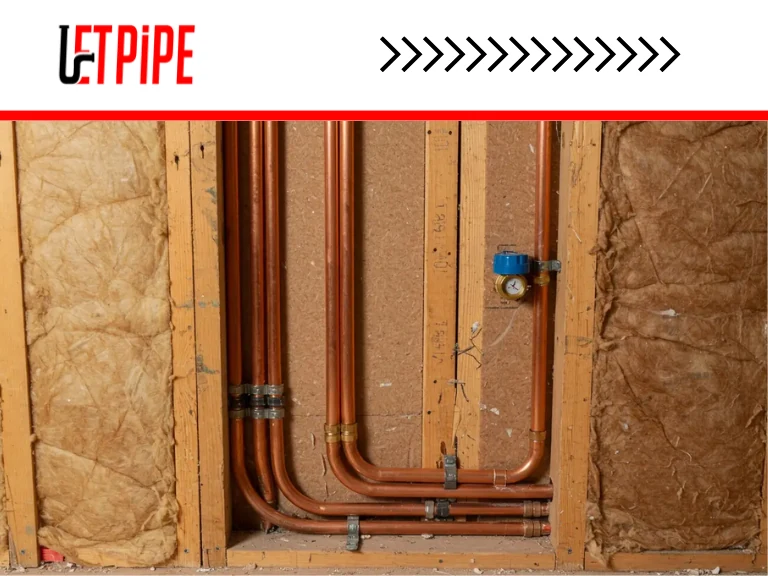
Copper is the traditional and premium choice for repipe work. It has a long performance record in Bay Area conditions, handles the region’s moderately hard water well, and is preferred by some buyers and HOAs in the area. Copper joints are soldered, which makes installation more labor-intensive than PEX but produces durable, long-lasting connections. JetPipe uses copper as the primary material for repipe work.
PEX is a flexible cross-linked polyethylene pipe that is faster to install and easier to route in confined spaces. Because it can bend around corners without fittings, it often requires fewer wall openings than a rigid copper installation. PEX is a practical, durable option for many homes and is the right choice in certain configurations. Where the job suits it and the homeowner prefers it, JetPipe also works with PEX.
The material choice does not change the timeline significantly for most homes. It does affect long-term durability characteristics and maintenance considerations. Your plumber should walk you through both options at the estimate visit.
How JetPipe Handles Repiping in the Bay Area
JetPipe Plumbing performs whole-house and partial repiping for homeowners throughout Sunnyvale, Mountain View, Cupertino, Santa Clara, Campbell, Palo Alto, Los Altos, San Jose, Milpitas, Fremont, Redwood City, San Mateo, and surrounding communities. California C-36 license #1139033.
We pull the permit before the job starts every time, without exception. Unpermitted repipe work creates real problems at resale and can affect insurance claims. We handle the permit application, coordinate the city inspection schedule, and manage the closeout. You do not have to track any of that.
Our estimate visits are thorough. We look at the existing pipe condition, access requirements, and your home’s specific layout before quoting. The price you are quoted is the price you pay.
Patching and cleanup are included. The job is done when the walls are closed, the permit is closed, and the house looks like a crew was never there except for the water pressure.
To schedule an estimate, call (650) 582-2527 or email jetpipeplumbing@gmail.com.
Frequently Asked Questions
Can I stay in my house during a repipe?
Yes. Professional repiping is designed to be completed while you stay home. Water is shut off during work hours each day and restored before the crew leaves each evening. Most homeowners find the disruption manageable with basic planning – filling a pot of water before the crew arrives, showering in the morning, and keeping the work areas accessible.
How long will I be without water each day?
On installation days, the water shutoff typically runs from when the crew arrives in the morning until they restore service in the late afternoon – roughly six to nine hours. On Day 2, the shutoff window is usually shorter since most installation is already complete. Evenings, nights, and weekends are fully normal.
Do I need to move furniture or clear the house?
You do not need to move out, but clearing the immediate work areas helps. The crew will need unobstructed access to under-sink cabinets, bathroom vanities, and wall areas along pipe runs. Moving items stored under sinks before the crew arrives saves time. The crew will protect floors and furniture with plastic sheeting, but clearing fragile or irreplaceable items from work areas is sensible.
Why is patching done after inspection rather than right after installation?
City inspectors need to see the pipe installation before the walls are closed. Patching a wall before the inspection means cutting it open again if the inspector needs to see something. Inspection first, then patching is the correct sequence, and it protects the homeowner by confirming the work passed before it is covered up.
What is the difference between copper and PEX for a repipe?
Copper is rigid pipe with soldered joints – durable, proven in Bay Area water conditions, and the traditional premium choice. PEX is flexible, faster to install, and requires fewer wall openings in many configurations. Both are long-term solutions. The choice depends on your home’s layout, the specific job requirements, and your own preferences. JetPipe uses copper as the primary material and can advise on which is the better fit for your home at the estimate visit.
Does JetPipe handle permits for a repipe?
Yes. A plumbing permit is required for whole-house repiping in all Santa Clara County cities, including Sunnyvale, Mountain View, Cupertino, and San Jose. JetPipe pulls the permit under our C-36 license before the job starts, coordinates all required inspections, and handles the permit closeout. The permit process is included in the job. It is not an add-on or a separate arrangement.
Does JetPipe patch drywall after the repipe?
Yes. Patching and texture-matching are part of every JetPipe repipe job. The patch crew comes after the city inspection passes. Walls are closed, texture-matched, and cleaned up. The job is not complete until the house looks finished.
Putting off a repipe because you’d have to live through it?